
What SS&C Deliver 2026 showed about how far agentic AI has actually gone
Orlando, September 2026. More than 1,100 leaders from financial services and healthcare at the JW Marriott Grande Lakes, and our first time at SS&C Deliver.
A different room
Asset management, wealth management, trust companies, accounting and operations teams, all in the same hallways. That mix is not what the wealth conference circuit usually looks like, and it changes the conversation. A trust operations lead and an RIA COO describe the same bottleneck in different vocabulary, and they rarely get to compare notes.
Different businesses, and the direction was the same everywhere. Straight to agentic AI. Some firms already had general-purpose AI tools in front of their teams and were working out how much of this industry those tools actually understand.
Four steps, and most firms are on the first
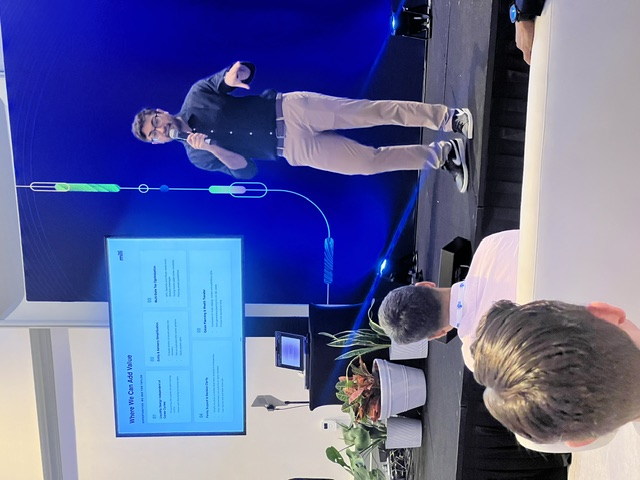
Chirag Gandhi took the Spotlight Stage on the Monday with a session on how advice firms are lifting client capacity by accelerating delivery of advice with AI agents. The frame he opened with is the most useful thing one could take home.
AI adoption in advice firms runs in four steps. Post-meeting tasks first. Then pre-meeting prep. Then portfolio and custodial workflows. Then proactive planning, where the system finds the work before anyone asks for it.
Most firms in 2026 are still on step one.
That sits oddly beside a conference where every hallway conversation was about agents. The ambition has moved to step four. The deployed reality is mostly step one, and the distance between those two is the whole opportunity.
The capacity math
Advisors spend 54% of their time on operational work and 46% with clients. Move the operational load onto agents and that ratio flips past 70% client-facing, which takes an advisor from around 80 clients to 120 or more.
That is the number a COO can build a plan against. It also explains why steps three and four matter more than step one. Notes and follow-ups are real work, and they are a slice of the 54%. Custodial paperwork, data kept straight across systems, and the review that nobody scheduled are the rest of it.
What step three looks like
The session walked through the version running inside SS&C Black Diamond. Pre-meeting briefs that pull live portfolio data alongside the CRM record. Custodial forms filled from both systems, with NIGO checks running before anything reaches signature. A custom skill that scans for accounts holding more than $25,000 in uninvested cash and drafts the outreach.
The last one is the step-four example. Nobody asked for that list. The agent went looking.
Governance was the other half of every conversation
SS&C spent the week making the same argument from the other side of the table. The company put its AI Gateway governance layer and its WorkHQ orchestration platform underneath a portfolio of AI releases spanning wealth, retirement, alternatives and asset management, and published a six-part docuseries about putting its own operations on those agents before selling them to 23,000 clients.
Bill Stone, SS&C's chairman and CEO, put the case plainly: "Agentic AI is challenging enterprises. The technology moves fast, the governance stakes are high, and organizations benefit only when the technology can be effectively incorporated into their established workflows."
Karen Geiger, who co-heads SS&C Wealth & Investment Technologies, described where the client base actually sits: "I think every firm is eager to adopt A.I. I think they want to know how it can be done securely and safely."
Put her sentence next to the four steps. Eagerness is not the constraint. Firms stall at step one because steps three and four touch custodial paperwork, client records and money movement, and nobody wants to be the first to find out what an unsupervised agent does with those.
The part that is not on the agenda
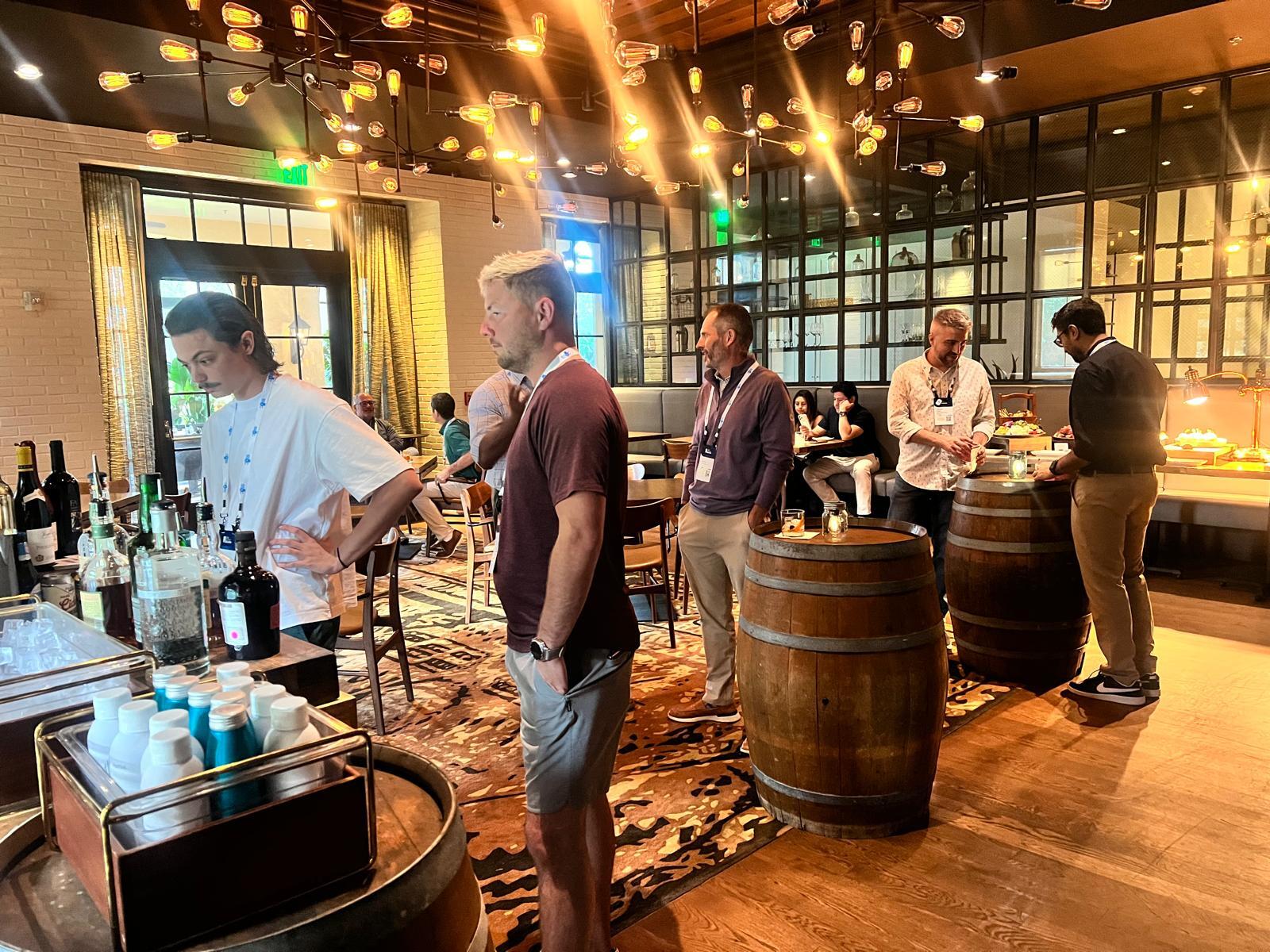
The happy hour ran late, the Mili-tinis went quickly, and the conversations that started at our kiosk finished in that room. Operations leaders talk differently once the badge scanner is put away.
Thank you to the SS&C team for having us, and to everyone who pulled up a chair to talk to us.